


If you have sensitive teeth, the idea of whitening your smile may sound appealing but a little intimidating. Maybe cold drinks already make your teeth uncomfortable, or you've tried whitening strips in the past only to experience sharp sensitivity afterward. Does that mean professional teeth whitening isn't an option?
Not necessarily. Many people with sensitive teeth can still enjoy a brighter smile with the right approach. The key is understanding what's causing the sensitivity and choosing a whitening method that works with your oral health needs.
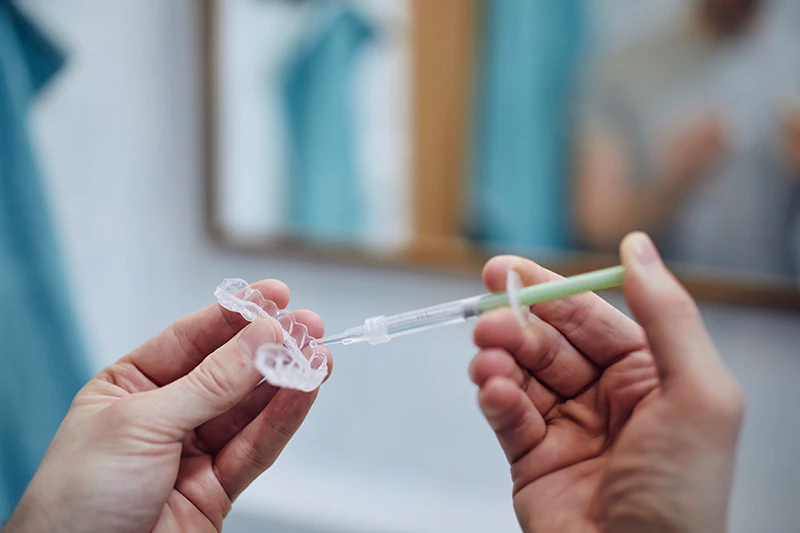
At Diamond Dental Group in Denver, CO, Dr. Katanov and his team offer professional take-home whitening kits with custom-fitted trays and dentist-guided treatment. We also provide desensitizing treatments to help patients manage sensitivity and protect their teeth. Here's what you should know before deciding whether whitening is right for you.
Why Do Teeth Become Sensitive During Whitening?
To understand whitening sensitivity, it helps to know a little about how your teeth are structured.
The outer layer of your teeth is enamel, which protects the more sensitive tissue underneath called dentin. Dentin contains tiny channels that connect to the nerve inside the tooth. When these channels become exposed, hot, cold, sweet, or acidic foods and drinks can trigger discomfort.
Whitening products typically use peroxide-based ingredients to break down stains within the tooth. During this process, some patients experience temporary sensitivity as the whitening ingredients interact with the tooth structure.
Sensitivity may feel like:
- A quick, sharp sensation when drinking something cold
- Temporary discomfort during or shortly after whitening
- Increased sensitivity to hot or cold foods
- Occasional tingling or aching in the teeth
Not everyone experiences these effects, and sensitivity is often temporary. However, if your teeth are already sensitive, it's worth identifying the cause before starting a whitening treatment.
What Could Be Causing Your Tooth Sensitivity?
Existing sensitivity doesn't always come from thin enamel. Several dental concerns can make teeth more reactive, and some should be addressed before whitening.
Enamel wear: Enamel can gradually wear down due to acidic foods and drinks, aggressive brushing, or teeth grinding. As the protective layer becomes thinner, the underlying dentin may become more exposed.
Gum recession: When gum tissue pulls away from the teeth, it can expose the roots. Unlike the visible crown of a tooth, roots don't have the same protective enamel covering, making them more sensitive.
Cavities or tooth decay: A cavity can expose sensitive inner layers of a tooth and cause discomfort, especially when eating or drinking.
Cracked or damaged teeth: Small cracks can allow temperature changes and pressure to irritate the inner tooth.
Gum disease: Inflammation and gum recession associated with periodontal disease can contribute to sensitivity around the teeth.
Teeth grinding: Clenching or grinding can wear down enamel and place additional stress on teeth, sometimes causing sensitivity.
These conditions can require different treatments, which is why a dental examination is an important first step.
Professional Whitening vs. Store-Bought Whitening Products
If you've experienced sensitivity with drugstore whitening strips or toothpaste, you may wonder whether professional whitening will be any different.
The biggest difference is the level of customization and guidance involved.
Over-the-counter whitening products are designed for general use. Whitening strips, gels, and trays come in standard sizes and strengths, which may not fit every person's teeth or sensitivity level. If a product doesn't fit properly, whitening gel can contact the gums and cause irritation.
At Diamond Dental Group, professional whitening uses dentist-provided products and custom-fitted trays.
Here's what makes that approach different:
Custom-fitted trays: Impressions are taken to create trays designed to fit your teeth. A better fit helps distribute whitening gel more evenly and minimizes contact with the surrounding gum tissue.
Professional-strength whitening gel: Dentist-provided whitening products use professional formulations designed to lift stains more effectively than many store-bought options.
Personalized guidance: Your dental team can evaluate your teeth, discuss your sensitivity, and provide instructions for using the whitening system safely.
Flexible treatment: Because whitening takes place at home, you can follow the recommended schedule and work toward your desired shade without rushing the process.
Professional whitening isn't automatically sensitivity-free, but having a dentist evaluate your teeth and guide treatment can help reduce unnecessary irritation.
How to Reduce Sensitivity Before and After Whitening
If your teeth are prone to sensitivity, a little preparation can make a difference.
Before Whitening
Schedule a dental examination. Before beginning whitening, have your teeth and gums evaluated. Your dentist can look for cavities, gum recession, cracks, and other issues that may contribute to discomfort.
Address existing dental concerns. If you have untreated decay, inflamed gums, or other dental problems, those should be addressed before whitening. Whitening doesn't treat these conditions, and applying whitening products to an already irritated tooth can make symptoms worse.
Ask about desensitizing treatments. Diamond Dental Group offers professional desensitizing treatments, including high-fluoride varnishes and desensitizing agents. These treatments can help strengthen enamel and protect exposed dentin.
Consider a sensitivity toothpaste. Some toothpastes contain ingredients designed to reduce sensitivity by helping block the pathways that transmit discomfort. Your dentist can recommend an appropriate product and explain how long to use it before whitening.
After Whitening
Once you begin whitening, continue protecting your teeth.
- Follow the recommended application time and frequency. Using more gel or whitening more often won't necessarily produce better results.
- Avoid very hot, cold, or acidic foods and drinks if your teeth feel sensitive.
- Continue brushing gently with a soft-bristled toothbrush.
- Use a sensitivity toothpaste if recommended by your dentist.
- Take a break from whitening if discomfort develops, and contact your dental team for guidance.
If sensitivity is severe, persistent, or concentrated in one particular tooth, don't assume it's simply a whitening side effect. It may be a sign of an underlying dental concern.
Does Professional Whitening Damage Enamel?
When used as directed under appropriate dental guidance, professional peroxide-based whitening is generally considered safe for enamel.
However, more whitening isn't always better. Overusing whitening products or leaving them on longer than recommended can increase sensitivity and irritate gum tissue.
It's also important to understand that whitening doesn't change the color of dental restorations. Crowns, fillings, veneers, and other restorative materials won't respond to whitening gel the same way natural teeth do.
If you have visible restorations, your dentist can help you plan your whitening treatment so the final shade looks as consistent as possible.
Is Professional Whitening Right for You?
Professional whitening can be a good option for patients who want to brighten stains caused by coffee, tea, dark-colored foods, tobacco, or natural aging.
It may be worth exploring if you've noticed that your smile looks more yellow or dull over time, or if store-bought products haven't delivered the results you hoped for.
However, whitening isn't the best first step for everyone. Patients with untreated cavities, active gum disease, significant enamel wear, or unexplained sensitivity may need other care before beginning cosmetic treatment.
At Diamond Dental Group, Dr. Alexander Katanov and the team take time to evaluate your oral health and help you understand your options. If sensitivity is a concern, professional desensitizing treatments may be part of the plan.
A Brighter Smile Starts With Healthy Teeth
Having sensitive teeth doesn't automatically mean you have to give up on whitening. With an evaluation, appropriate preparation, and a customized approach, many patients can brighten their smiles while keeping comfort in mind.
The most important thing is to understand why your teeth are sensitive before starting treatment. Addressing the underlying cause can help you avoid unnecessary discomfort and protect your long-term oral health.
Interested in professional teeth whitening? Contact Diamond Dental Group in Denver, CO, to schedule a consultation. Dr. Katanov and his team can evaluate your teeth, discuss your sensitivity concerns, and help you decide if professional take-home whitening is right for you.


